Friday, May 24, 2013

Star Trek versus Obama!


Gene Roddenberry 1921 - 1991
His ashes were shot into space 1997
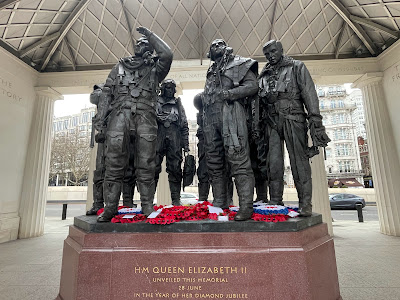
This memorial day weekend it is particularly apt to remember Gene Roddenberry, the creator of Star  Trek, flew 89 combat missions with the US Army Air corps in World War II.  After the war he became an LAPD cop.  Working in a company town he then started to write TV scripts for Gunsmoke and other TV series.  Star Trek was originally conceived as a "Western in outer space".  The crew of Enterprise was a United Nations living in a post-nationalist universe that had overcome racism, sexism, etc.  The "Prime Directive" was a direct commentary and indictment of US involvement in the Vietnam war that was raging during Star Trek's brief three year run on NBC from 1966 to 1969.

Social commentary has, therefore, been part of the Star Trek phenomenon from its inception.

Star Trek, Into Darkness: Obama Critique?
In the 18th century French playwrights could criticise their kings as long as they set the plays' action somewhere in an ancient Greek setting.  The original Star Trek offered a Utopian vision of the future that questioned hawkish attitudes during the Vietnam war.  Today the Hollywood left can criticise President Obama as long as the story is set in a science fiction universe of the distant future.  Make no mistake about it, the latest release, Star Trek: Into Darkness boldly criticises the Obama administration where no Hollywood types have gone before!

The movie opens with horrific 9/11 style terrorist attacks in London (NB another senseless terrorist attack claiming the life of a 25 year old soldier in London this week).  It quickly becomes apparent that the attacks have been carried out by a former Federation agent named John Harrison.  Kirk is ordered by his superior, Federation Admiral Alexander Marcus, (imperialist title fully intended) to track down the perpetrator and to kill him with a full compliment of brand new high-tech torpedoes.  Admiral Marcus assures Kirk that the target planet is uninhabited except for the villainous Harrison, leaving no danger of collateral damage.  Federation intelligence assures us that the projected operation is a "slam dunk," so to speak.

It turns out that the CIA's, whoops I meant Federation's, intelligence sometimes proves to be faulty.  The planet is dangerously close to Klingon space and there is the danger that this act of counter terrorism might ignite a much wider war.  There are actually Klingons on the "uninhabited planet" who create the possibility of collateral damage, political repercussions and a wider war.  Without giving too much plot away, the new torpedoes are not quite what they seem.  First officer Spock manages to use Vulcan logic to persuade Captain Kirk that it would be better to defy his Admiral's direct orders by capturing Harrison alive, interrogating him and bringing him to face justice on planet earth.

The Shadow War
In Mark Mazzetti's new book The Way of the Knife (2013, www.amzn.com/B00AEDDSUC) he writes, "The Intelligence Authorization act of 1991 mandated that all covert operations be authorised by written presidential filing, explaining the need for the secret activity, and that the White house notify the House sand Senate intelligence committees shortly after the finding is issued to the CIA.  And yet the 1991 act contained a significant loophole: it exempted the Pentagon form these burdensome requirements if the military was conducting secret operations it considered to be "traditional military activities."

The law offered little guidance as to what constituted "traditional military activities," partly because the George H.W. Bush White House and Pentagon successfully lobbied Congress to keep the language vague.  These activities were ultimately defined as any operations carried out by the military that were connected to "ongoing" or "anticipated" hostilities.  In other words, the Pentagon could justify sending troops to any country in the world if it could make the case that the United States was at war inside that country -- or might be at some point in the future.

These arcane provisions were little discussed for a decade, until the days after the September 11 attacks when Congress gave President Bush a sweeping mandate to wage war all over the globe.  According to the provisions of the Authorization for Use of Military Force (AUMF), the United States was not at war with any one particular country but at war in any country where al Qaeda was operating.  The measure, in effect, gave Rumsfeld the license he was looking for to carry out a global war."

Since then the United States has invaded Iraq and fought a global war on terror in countries around the world. Coalition troops pursue Al Qaeda across the border from Afghanistan into Tajikistan killing 20 militants in one 2010 incident (http://www.telegraph.co.uk/news/worldnews/asia/afghanistan/8073451/Al-Qaeda-training-camp-uncovered-in-Tajikistan.html).  The United States has now deployed into 20 African countries including drone bases in Niger and Yemen.

The new Predator drone technology initiated by President Bush and enhanced and perfected by President Obama has allowed the US to hit terrorists with Hellfire missiles in many countries where we are not even at war such as Yemen and Pakistan.  This new technology has made allowed the US President in two administrations to act as judge, jury and executioner.  There is no need for messy debates about the possible need for enhanced interrogation techniques (AKA torture) or about prisoner treatment and conditions on Guantanamo (referred to as "Strawberry Fields" because the prisoners remain "forever").  There is no due process or rule of law. Terrorist problems can now simply be vaporised with the equivalent of a photon torpedo.  OK, there is there risk of collateral damage.  Yes, there is the risk of faulty intelligence too (not merely WMD in Iraq under Bush but the CIA mistakenly targeted the Chinese embassy in Belgrade in 1999 during the Serbian war under Clinton).  Moreover, there is the risk that by living by "the way of the knife" we ultimately incite thousands of others to wield knives or, as in London this past week, machetes against us.

Lee Rigby RIP, 1988 - 2013
Nevertheless, studies show that most Americans continue to approve of these kill lists.  President Obama even was willing to compromise details of this covert shadow campaign in order to burnish his reputation for decisive action prior to the recent election campaign (http://reason.com/archives/2012/05/31/obamas-secret-kill-list).

According to a Stanford poll the USA has become more "hawkish on counter terrorism matters.  A large majority -- 69 percent of respondents -- said they supported the American government secretly assassinating terrorists." (Source: The Way of the Knife, Mark Mazzetti, 2013, www.amzn.com/B00AEDDSUC).
Abdulrahman al Awlaki, 1996 - 2011
Killed by our Nobel Prize-winning POTUS
An American citizen who had terrorist and extremist links, Anwar al Awlaki, was killed with a CIA drone strike in Yemen in 2011.  One could argue that this action might be justifiable.  A few weeks later his sixteen year old son, Abdulrahman Al Awalaki, born in Colorado, was killed by a JSOC strike  in Yemen -- a victim of collateral damage due to his proximity to perceived "bad guys".  His son was in Yemen looking for his father and he was killed while sitting in an open air restaurant in Shabwa province.  The skinny teen was guilty of having gone looking for his father in Yemen.  Here is is his Facebook page...https://www.facebook.com/abdulrahman.14.10.2011  (Source: The Way of the Knife, Mark Mazzetti, 2013, www.amzn.com/B00AEDDSUC).  See also http://abcnews.go.com/Blotter/awlaki-family-protests-us-killing-anwar-awlakis-teen/story?id=14765076#.UZ_fvmh5n0c.

Change the poll question and the answer will, of course, vary.  "Do you approve of the American government killing terrorists?" will elicit a different response from "Do you approve of the American government killing American teenagers who have committed no crime?"  "Do you approve of unarmed drones being used in the USA to enforce traffic regulations?"

While some Conservatives are ambivalent on the question of killing proven terrorist targets, is it not abundantly clear that anyone who believes in limited government must have grave concerns about the current American drone program?   Recent events demonstrate that even President Obama is clearly now having second thoughts on the entire program (http://www.usatoday.com/story/news/2013/05/23/obama-counter-terrorism-speech-drones-guantanamo-bay/2354001/).

As Lord Acton (1834 - 1902) wrote, "Power tends to corrupt, and absolute power corrupts absolutely."  How many wives would Henry VIII have had if he had had access to drone technology during the Tudor era (see earlier post Tower of London, 3/10/13)?

Commander Kelly concludes, "Do we not risk becoming as evil as the terrorists we confront if we forsake the rule of law and act without humanity, compassion or even...logic?  A President cannot and should not "play God".  In order to confront the terror threat successfully, we must combine the heroic activism of Kirk with the cool dispassionate analysis of Spock.*  Otherwise, we all risk proceeding into a "darkness" that is indeed unimaginable."


*  Perhaps the London cops this week had the Kirk/Spock balance just about right.  Shoot the villains in the legs and bring them in for questioning!  One suspects that Gene Roddenberry, ex-LAPD cop, ex-bomber pilot might approve from his celestial orbit.


Monday, May 20, 2013

Cinque Terre

Commander K. Cinque Terre
The Cinque Terre on the Italian Riviera is simply one of the most beautiful hiking trails in the world.    The Cinque Terre is made up of five towns -- Monterosso, Vernazza, Corniglio, Manarola and Riomaggiore -- on the Ligurian coast.  The Cinque Terre is a designated Italian National Park (http://www.parks.it/parco.nazionale.cinque.terre/Eiti.php) and a Unesco World Heritage site.  I had the good fortune to hike part of this trail with my beautiful bride and a local guide last week.  We started in Levanto which is actually north of the official five towns that make up the Cinque Terre.

We only had time for a one day trip, but the many charming hotels and excellent restaurants made the idea of a longer overnight stay very compelling.

In 2011 a severe flash flood caused landslides in the area which claimed four lives  (http://www.chicagotribune.com/travel/sns-201210291130--tms--travelrsctnri-b20121030-20121030,0,6964678.column).  Happily the area has bounced back and life has, more or less, returned to normal.   Some parts of the trail must still be navigated by boat or the nearby train.  We started in Levanto which is actually north of the official five towns that make up the Cinque Terre.

Welcome to paradise!,  Cinque Terre, Italy
You will see dramatic views of the Mediterranean ocean.  You will find charming and colourful Italian villages.  The scenery just can't be beat.

Atlas shrugged...?
Near Monterosso you will statues of giants built into the rock!

A memorial to the fallen sons of Monterosso
from WWI and WWII
Even in this peaceful and serene location you will find reminders of how war (guerra) has scarred the face of Italy.  You will find World War I and II memorials in most of the towns.

Ships of the Marina Militare, La Spezia
Just a few miles south of Riomaggiore you will find the city of La Spezia which continues to be the arsenal of the Italian Navy (Marina Militare).  During World War II, the Italian fleet left from La Spezia to defect from the Axis to the Allies.  The Royal Navy's Admiral Cunningham on September 3, 1943 signalled the Admiralty, "Be pleased to inform their Lordships that the Italian battle fleet now lies at anchor under the guns of the fortress of Malta" (See earlier post Malta in WW II, 5/19/13).

Commander Kelly concludes, "Buy some hiking shoes from my friends at www.altrec.com and go visit  the incomparable Cinque Terre!"

Travel notes: I highly recomnend our local guide Michele Colloca for your tour of the Cinque Terre.  He can be reached at michelecolloca@live.it.


Sunday, May 19, 2013

Malta in World War II

Malta Chessboard

To understand Malta's role in the Second World War it helps to know a little about the game of chess.  Every good chess player knows about the "strategy of the center".  Power radiates outward from the middle.  Control the center of the chess board and you will almost surely win the game.

Malta in the center of the Med.
The island of Malta lies at the approximate center of the Mediterranean sea.  It lies about a thousand miles east from Gibraltar and a thousand miles west from Alexandria.  It is only 60 miles south of the much larger and more populous island of Sicily.  Malta was home to major Royal Navy and RAF bases throughout the war.

The Siege of Malta
On June 10, 1940  Mussolini, cynically observing the rapid fall of France to the German Blitzkrieg and hoping for a share of the spoils, joined the Axis cause and declared war on the Allies.  The next day Italian bombers began attacking Malta.  The first casualties were a Maltese mother and her two sons, aged four and five, who had been walking near the dockyards.   Source: Fortress Malta: An Island Under Siege 1940-1943, James Holland www.amzn.com/1401351867).

"Faith", Gloucester Sea Gladiator
National War Museum, Valletta
Malta's air defence consisted of three out-dated Gloucester gladiator fighters that were dubbed Faith, Hope and Charity.  When the war began in the Mediterranean "Malta had just 34 heavy anti-aircraft guns to protect an entire island with its three airfield, a massive harbour complex and over 200 miles of coastline."  (Source: Fortress Malta: An Island Under Siege 1940 -1943, James Holland www.amzn.com/1401351867).

Commander K. and Anti-Aricraft Gun
Malta at War Museum, Vittoriosa
Modern war requires massive logistical support.  Axis forces in North Africa, later led by Field marshal Rommel, were pushing on towards Alexandria in an effort to capture Egypt.  The Axis forces supply lines ran through the Mediterranean from Italian ports to ports in Libya such as Tripoli and Benghazi.  The island of Malta was perfectly positioned to interdict Axis supply lines by air and sea.

Royal Navy Submarine, Malta Maritime Museum
The Royal navy deployed submarines to Malta to attack Axis shipping.  Naval aviation also attacked Italian merchant shipping convoys.  In November of 1941, 77% of Rommel's supplies were sunk by submarines and naval aircraft operating out of Malta. Submarines "magic carpet service" was also critically important for bringing desperately needed supplies into Malta.  (Source: Fortress Malta: An Island Under Siege 1940 -1943, James Holland www.amzn.com/1401351867).


Fort St. Angelo, Royal Navy base, Malta
Just as many Japanese-Americans were interned during World War II in the USA, many Maltese of Italian descent were deported and interned in British-controlled Africa for the duration of the war.

The island of Malta was the most bombed part of the world in the Second World War.  The beautiful 19th century opera house in Valletta was destroyed in the war and has yet to be rebuilt.

Plaque from George VI, Valletta, Malta
In April of 1942 King George VI awarded the entire island the George Cross, the highest civilian award for gallantry -- an unprecedented honor.  To this day, Malta is still known at the "George Cross" island.
RAF display, Malta at War Museum, Vittoriosa
While the siege of Malta was overwhelmingly a Commonwealth show, it is also true that America played a significant role in the defence of the island.

USS Wasp, Malta Maritime Museum
America provided vital assistance to the defence of Malta during the war.  Even prior to Pearl Harbor, Churchill communicated to FDR Malta's desperate need for additional fighter aircraft and the recently commissioned aircraft carrier, USS Wasp, was dispatched by FDR to Glasgow to assist the beleaguered island.  In April and, again in May, of 1942 the USS Wasp ferried Spitfires and their pilots, including Denis Barnham, the author of Malta Spitfire Pilot (www.amzn.com/1848325606), to Malta.  Winston Churchill himself rang up the captain of the USS Wasp* and said, "Many thanks to you all for your timely help.  Who said a Wasp couldn't sting twice?"

Maltese children raise the Stars and Stripes
at arrival of the USS Ohio
The USS Ohio was an American built (though English crewed) Liberty ship (see earlier post SS Jeremiah O'Brien, 8/13/12) that was part of the critical convoy called Operation Pedestal.  Hit by numerous bombs and torpedoes, she barely managed to reach Valletta harbour delivering her precious cargo of airplane fuel.  Other American ships resupplying Malta, such as the Santa Elisa, did keep their American crew.

Fort St. Angelo, Royal Navy base until 1979
After the siege of Malta lifted in 1943 there was a flood of American troops and officers into Malta.  In June of 1943 General Eisenhower, Commander-in-Chief of Allied Forces North Africa and Mark Clark, planned Operation Husky, the invasion of Sicily, from their headquarters in Lascaris.  Many British felt that the arrival of the better paid American troops drove up prices on the island.

FDR himself paid two visits to the plucky island once in December of 1943 and again for the Malta Conference with Churchill in February 1945.  On December 7, 1943, the second anniversary of Pearl Harbor, while in Malta, FDR declared as follows...

FDR plaque in Valetta, Malta

"In the name of the people of the United States of America, I salute the Island of Malta, its people and defenders, who, in the cause of freedom and justice and decency throughout the world, have rendered valorous service far above and beyond the call of duty.

Under repeated fire from the skies, Malta stood alone, but unafraid in the center of the sea, one tiny bright flame in the darkness—a beacon of hope for the clearer days which have come.

Malta's bright story of human fortitude and courage will be read by posterity with wonder and with gratitude through all the ages.

What was done in this Island maintains the highest traditions of gallant men and women who from the beginning of time have lived and died to preserve civilization for all mankind."

Commander Kelly concludes, "Malta was simply the Minas Tirith of World War II. It was home to an unsinkable aircraft carrier that the Axis could not subdue.


Traveler notes: If you visit Malta be sure to visit the National War Museum (http://www.heritagemalta.org/resources/documents/HMWarMuseum.pdf) the Malta Maritime Museum  (http://www.visitmalta.com/en/info/maltamaritimemuseum) and the Malta at War Museum (http://www.maltaatwarmuseum.com/) in Vittoriosa. 


* The USS Wasp was later sent to the Pacific theatre where she was sunk by a Japanese submarine at the battle of Guadalcanal.


Sunday, May 5, 2013

RAF Museum, Hendon

RAF Hurricane, RAF Museum Hendon

There are a handful of things for which the entire world must remain forever grateful and indebted to the British people....the existence of William Shakespeare, the tradition of parliamentary democracy, the invention of afternoon tea and the performance of the RAF during the Battle of Britain.  The most pleasant way to repay this last debt is, perhaps, with a visit to the RAF Museum in Hendon.

The RAF Museum in Hendon is a marvellous treasure trove of aviation history right here in London.  Here is the web site...http://www.rafmuseum.org.uk/.  Admission is free.  It is easily accessible with a short 10 minute walk from the Colindale tube stop on the Northern line.  The staff is friendly and the guides are informative.

Commander K. + Sopwith Camel
Photo: Courtesy Marc Leslie
Here you will find aircraft from the dawn of flight just over a century ago to modern jet aircraft.

WWI Albatross, RAF Museum Hendon
The Grahame-White building, located in its historic factory, boasts wonderful restorations and recreations of early aviation and World War I era aircraft.  You will find planes such as the German Albatross that was the type flown by the Red Baron (see photo above and earlier post Red Baron, 9/17/12).

German ME- 262 + Friends
Photo: courtesy: Marc Leslie
The Battle of Britain Hall at the RAF Museum has a short film presentation that runs on the hour and provides an excellent introduction to Britain's finest hour.  You will learn more about Britain's wartime experience.  You may see examples of steel pikes that were distributed to Home Guard members to repel the Nazi invaders before firearms became available.  You can see replicas of Anderson shelters that were supplied to citizens for their protection from the Blitz by the British government.  Some have argued that the Anderson shelter marked the beginning of British socialism -- "If the government must pay to protect us from the Luftwaffe why shouldn't they protect us from cancer with NHS?"

With friends and a P-51 Mustang
RAF Museum, Hendon
Photo: Courtesy Marc Leslie
The vital role of the Allied Strategic bombing campaign (see earlier post RAF Bomber Command, 10/13/12) is not neglected a the RAF Museum.  You will find non-RAF planes such as the American P-51 Mustang that provided bomber escort (see earlier post Tommy Hitchcock and the P-51 Mustang, 6/27/12).  An American B-17 is posed loading its bombs and crew.

Commander K. + B-17, RAF Museum Hendon
Photo: Courtesy Marc Leslie
American air crews flew bombing missions by day while their Commonwealth counterparts flew at night in heavy bombers such as the Lancaster in order to deliver a round-the-clock punch to the Axis.

Inscription on Lancaster Bomber, RAF Museum Hendon
Photo: Courtesy Marc Leslie

This Lancaster's  RAF crew remembered the arrogant proclamation of Reichsmarschall Hermann Goering.

RAF Vulcan Bomber,  RAF Museum, Hendon
You will also find many Cold War era aircraft such as the Vulcan bomber; this type of plane that was hijacked along with its atomic payload by SPECTRE in the 1965 James Bond movie, Thunderball.


RAF Spitfire: A Thing of Beauty
Commander Kelly concludes, "That war is a terrible destructive activity and that the Second World War was the most terrible war in human history are beyond doubt.  We must also, however, acknowledge that, from a purely aesthetic standpoint, the Spitfire is also one of the most beautiful things ever made by the hand of man.  The beauty of the Spitfire inheres not merely in the perfection of her form and lines, but also in the nobility of the cause in which she served.  Remember "the Few" with a visit to the RAF Museum in Hendon."


Special thanks to Marc Leslie for photographic assistance.


Saturday, May 4, 2013

Ponte Vecchio in WWII, Florence

Benvenuto Cellini, Ponte Vecchio, Florence

The Ponte Vecchio is a landmark for tourists visiting Florence.  "Ponte Vecchio" means simply "Old Bridge" and there was, in fact, a bridge on this location dating back to Roman times.  This ancient bridge was completed in 1345 and has had small family-run jewelry shops since the 16th century.  Here  the tourist can find a golden souvenir of their sojourn in Italy -- perhaps some gold cuff links with the Florentine Fleur de lis?

The term "bankrupt" is said to derive from the Italian words "banca" -- bench and "rotta" -- broken.  If a merchant fell on hard times his table on the Ponte Vecchio was broken.

There is a bust of Renaissance artist Benvenuto Cellini (1500 1571).  Cellini was a Florentine painter, sculptor, author and goldsmith.
Ponte Vecchio, Florence
Many tourists crowd this street every day of the year.  Few of them realize how the bridge was very nearly destroyed in World War II.  The Allied armies were advancing North up the length of Italy.  They received significant assistance from the local partigiani (partisans) many of whom were communists.  In August 1944 the Allies were about to break out North of the Arno river which bisects Tuscany and stream into Italy's industrial heartland (Milan, Bologna, etc.).

The key to a rapid advance lay in the use of the bridges across the Arno by mobile columns of tanks and armored vehicles.  Almost all the bridges over the Arno had been destroyed by the Germans to slow the Allied advance.  There was one, however, that remained -- the Ponte Vecchio.

Some rumors suggest that Adolph Hitler, the frustrated artist, ordered the bridge to be saved (e.g. http://www.timetravelturtle.com/2012/04/ponte-vecchio-florence-hitler/).  This seems highly unlikely.  It is far more probable that Adolf Hitler ordered the destruction of ALL bridges across the Arno including the Ponte Vecchio.

Gerhard Wolf Plaque, Ponte Vecchio
It is also probable that one man, however, refused to obey Hitler's direct command.  One man had the courage to defy a dictator and act like a hero;  Gerhard Wolf (1886 - 1962) was the German Consul to Florence from 1940 to 1944 where he came to admire Italy's art, culture and people.  Wolf did not want to be forever know as the man who destroyed the Ponte Vecchio.

What is absolutely certain is that Wolf, a Nazi party member and servant of the Third Reich, saved Jews and partisans in Florence.  The distinguished Jewish-American art historian Bernard Berenson (1865 -1959) was captured by the Germans but was hidden by Consul Wolf during the war.  In the midst of war's chaos, Gerhard Wolf helped build a bridge to a better world free of war and tyranny.

Ponte Vecchio, 1944
The hero of Ponte Vecchio reminds us of the philosophic principal that moral categories never apply to collective identities such as nationality, religion, ethnicity or party affiliation but solely to individuals.  It is the individual acting in accordance with their conscience that is capable of moral courage or obloquy, never the collective.

Gerhard Wolf was affiliated with the most corrupted political party of all time, yet he showed moral courage of the highest order.  Let us not forget that some of there greatest heroes of the Second World War were German and Nazi party members -- Johnny Jepson (see earlier post Double Cross: The D-Day Spies, 7/1/12), Oskar Schindler and Claus Von Stauffenberg of Operation Valkyrie.

Commander Kelly says, "Gerhard Wolf's moral courage on the Ponte Vecchio was an expression of quintessentially Conservative values: 1) affirmation of the value of human life, 2) preservation of the legacy of our past*, 3) the need for limits to state power and, finally, 4) an appreciation for capitalism and free trade.   Remember, honor and thank Gerhard Wolf as you stroll across the Ponte Vecchio in Florence."


* Contrast this with the pronouncement of Chairman Mao, "People like me long for its destruction, because when the old universe is destroyed, a new universe will be formed.  Isn't that better?"


Tuesday, April 30, 2013

Brief History of Malta

Commander K. by the Azure Window, Gozo
Malta is an archipelago of rocky limestone islands that lie at the center of the Mediterranean.  Humans have lived on Malta for over 7,000 years.  These little islands represent a microcosm of Europe as a whole and have an awful lot of history.

Gganjita Temple, Gozo
On the small island of Gozo you will find the Ggantija Temples -- a megalithic pagan complex that dates back to 3600 - 3000 BC and bears a resemblance to Stonehenge.  Here Stone age man expressed his longing for the divine with rituals of life and fertility.  These temples also resemble Filitosa on the island of Corsica (see earlier post Corsica, May 28, 12012).

Commander K. at the Ggantija Temples, Gozo
The first arrivals were stone age people coming in boats from the much larger island of Sicily which lies about 60 miles to the North.  The Phoenicians settled on island between 800 and 480 BC and used their safe harbours as a trading post.  They were followed by the Carthaginians and the Romans.

Phoenician pottery
National Museum of Archaeology, Valletta
St. Paul writes in Acts in the New Testament "we discovered that the island was called Melita (Malta). The natives treated us with uncommon kindness. Because of the driving rain and cold they lit a fire and made us all welcome."  St.  Paul encountered a serpent who did not harm him and healed the father of Publius, a local Roman official.

In 870 the Arabs conquered Malta.  Their influence endures today in the Malti language -- consider the town of Mdina which means "fortified town" as in Arabic.  They ruled until 1090 when Malta was conquered by the Normans under Count Roger (it was a busy century for the Normans with England and Sicily).  The Knights Templar were driven out of Cyprus by the Turks and relocated to Malta in 1530.

Jean La Valette, Valletta Malta
The great Siege of Malta took place in 1565.  About 700 Knights of Malta, aided by several thousand local Maltese, held out against a Muslim army of over 30,000 warriors led by Mustafa Pasha. After three months and the death of one of Mustafa's favorite commanders, the Arabs abandoned the siege.   The Maltese resistance was led by Grand Master Jean La Valette.  In gratitude for his victory, he founded the city which is today Malta's capital -- Valletta.

St John's Co-Cathedral, Valletta
The Knights of Malta amassed great treasure and built great Baroque monuments such as St John's Co-Cathedral.  St. John's also features two Caravaggio (1573 - 1610) masterpieces, The Beheading of St. John and St. Jerome.  The Knights really did pay tribute to the King of Spain in the form of a Maltese Falcom and their treasure really was "the stuff that dreams are made of".

Napoleon plundered Malta, 1798
In 1798 General Napoleon, who must have shared Sam Spades' dreams, stopped, on his way to Egypt to sack Malta thus ending the long reign of the Knights.  Today in the Louvre museum in Paris you can find the jewel-encrusted Sword of Valletta that French troops looted with a description that reads "A gift from the people of Malta".  Admiral Nelson soon annihilated the French fleet at the battle of Aboukir bay stranding Napoleon's army in Egypt and making the defence of Malta impossible.  In 1800 the Royal navy, in conjunction with the local Maltese, overwhelmed and expelled the French forces.  Just as the Maltese welcomed St. Paul, they also welcomed the British as liberators from the rapacious French.

Queen Victoria, Valletta, Malta
Lord Nelson had himself dismissed Malta as being "a useless and enormous expense".  His successor, Admiral Lord Collingwood shared the view and called Malta "the most gossiping, gourmandizing place I ever heard of".  Nevertheless, strategically-positioned Malta would remain a British colonial possession for the next 164 years.

Madonna and Child, Mdina, Malta
Malta was used as a hospital station for troops engaged in the Crimean war and also during the First World War.  Nor were the British so foolish as to interfere with the island's devoted Roman Catholic faith.

Fort St. Angelo, Former Royal Navy base, Malta 
In 1882 one visitor to Malta wrote...

"Most Englishman at home are so far from warlike sights, that they are apt to forget that their country has after all shown herself great in war as in commerce.  But no man can forget that fact as he stands her upon the Baracca of Valletta and looks down upon the grab forts and the ironclad which sleep securely beneath their walls."   Source: Blue Water Empire, Robert Holland, 2012, www.amzn.com/0141036109

British Power in the Med
On June 10, 1943 Il Duce declared war on the Allies.  The next day Italian planes began bombing Malta.  Joined later by the Luftwaffe, Malta became the most bombed part of the planet during the Second World War.  The siege continued for the next three years as Axis forces attempted to starve the island out.  The island and its people suffered and fought back.  The entire island was awarded the George Cross by King George VI in 1943 -- it is still referred to today by some as the "St. George Island".  Malta was used as a springboard by the Allies for their invasion of Sicily and Italy.  The Maltese had survived their second great siege.

Message to Malta from King George VI

In 1964 the island gained its independence from Britain.

In 1979 the Royal Navy withdrew its base from Malta.  Libyan dictator Colonel Gadaffi, who supplied the island with cheap oil, attended the ceremony.  The strongman "in his arrogant showman form, gave the thumbs down when the Union Jack was lowered."  Source: Blue Water Empire, Robert Holland, 2012,  www.amzn.com/0141036109.

in 2008 The Republic of Malta joined the Euro.

Today, happily, Malta is invaded merely by hordes of tourists seeking sun, history, natural beauty, gourmandizing and a warm welcome from the Maltese people.


Tuesday, April 23, 2013

Museo Napoleonico, Rome

Commander Kelly at Museo Napleonico
Rome, Italy


"Dans le monde il n’y a qu’une alternative : commander ou obéir. On prétend que, pour bien savoir commander, il a fallu d’abord bien savoir obéir. Quelle erreur ! Je n’ai jamais obéi, moi, j’ai toujours commandé." (Napoléon Bonaparte)

"In the world there is only one alternative: command or obey. It is contended that, to know command, one must first learn to obey. What a mistake! I never obeyed, me, I always commanded." (Napoleon Bonaparte)


On the banks of the Tiber across from the Castel Sant'Angelo you will find the Museo Napoleonico -- one of the foremost museums in the world devoted to Napoleon I, the Emperor of the French.  You will find the link here...http://en.museonapoleonico.it/.

As the bicentennial of the battle of Waterloo in 2015 looms before us, Napoleon Bonaparte continues to fascinate the public.  More books have been written about Napoleon than any other person in human history with the exception of Jesus Christ.

Napoleon I
He sold us the Midwest
To the French, Napoleon was their moment of maximum glory.  To the Corsicans, he was their favorite son and...a traitor.  To Americans, Napoleon remains relevant (see earlier post Napoleon...Relevant Today, 5/20/12) if only because the Louisiana Purchase from Napoleonic France by President Jefferson accounts for 23% of all current US territory including ALL of the states of Arkansas, Kansas, Missouri, Iowa, Oklahoma as well as parts of Minnesota, North and South Dakota, Colorado, Wyoming, Montana, New Mexico, Northern Texas and Louisiana.  To Europeans, Napoleon's legacy endures principally in the dream of a unified and centralized European Union and currency.  To the Russians, he was a proto-Hitler who invaded their nation and burned the holy city of Moscow.  To the British, he will always remain the tyrannical ogre who despised their "nation of shopkeepers," threatened their island home with invasion and then starvation, only to be defeated by their greatest martial heroes -- Nelson and Wellington.  

Napoleon in coronation dress
Museo Napoleonico, Rome
This museum has some of the finest paintings and other works of art associated with the Napoleonic era.  The museum was itself a gift made in 1927 by a Bonaparte descendant, Giuseppe Primoli (1851 - 1927).  The museum was inaugurated by Il Duce himself in 1934 (see video below in Italian) who sought to bask in the Emperor's shadow.

Napoleon I, 1769 - 1821
Napoleon  and the Bonaparte family had strong connections to Italy and to Rome.  Napoleon formed the Kingdom of Italy and became its first King in 1805.  Napoleon once said, "Io sono Italiano o Toscano, piutosto che Corso" ("I am more Italian or Tuscan than Corsican").  His family had roots in the Tuscan town of San Miniato (see earlier post San Miniato, Home of the Bonapartes, 12/2/12).

Pope Pius VII (1800-1823) being arrested by French troops in Rome
Napoleon's Roman connections run deep as well.  Napoleon, heir to the French Revolution, had stormy relations with the Vatican.  He sent French troops to arrest the Pope Pius VII in 1808.  Most of his family members, however, fled to Rome after his exile to St. Helena in 1815.
Pauline Bonaparte 1780 - 1825
By Joseph Kinson
Napoleon's favorite and prettiest sister was Paulina Bonaparte.  Her first husband was General Leclerc who died of yellow fever on Sant Domingue (now Haiti -- see my earlier post Toussaint L'Ouverture Champion of Freedom and ...Conservative?, 4/27/12).  Her only son, Dermide, died at age eight.  She later married a wealthy Roman, Prince Camilo Borghese (Villa Borghese gardens).  She was the only one of Napoleon's siblings to accompany him in exile to Elba.  She later lived in the Villa Paolina in Rome.  You will even find this model of Paulina's breast in this museum!

A model of Pauline's breast
For more tittilating tales about Napoleon's nymphomaniacal sister I recommend this blog...http://scandalouswoman.blogspot.co.uk/2008/05/notorious-pauline-bonaparte.html.

Napoleon's brother Lucien was considered the "Rebel" of the family (see earlier post Napoleon and the Rebel, 10/24/12).  Lucien the Republican politician helped Napoleon advance to power and Napoleon never forgave the debt.  You can find a portrait of Lucien, who lived for a time in Florence, here as well.
Lucien Bonaparte 1775 - 1840, by F.X. Fabre
There is a charming painting by Jacques Louis David of Napoleon's nieces.  For the full and tragic tale of Carlotta or "Charlotte" Bonaparte see my earlier post Napoleon Son of Tuscany, 11/29/12.

Zenaide and Carlotta Bonaparte, by by J. L. David


Commander Kelly says, "When in Rome, visit the Museo Napleonico and Vive Napoleon!"

Special Thanks to Matteo Pierattini and all the staff of the Palazzo Tornabuonni (http://www.palazzotornabuoni.com/en/default.asp) in Florence.